Costa Rican Spanish: common words, what they mean, and why they matter for your business
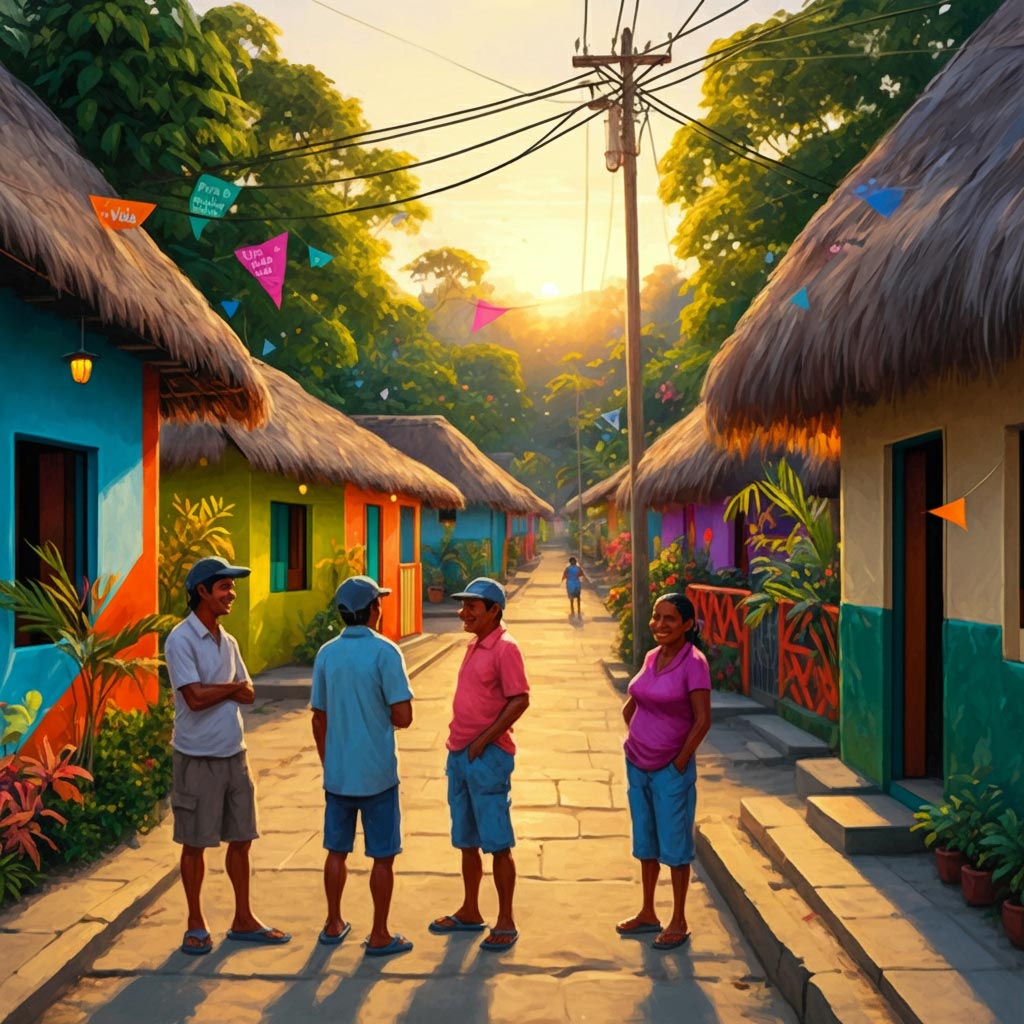
Costa Rican Spanish has its own vocabulary that surprises almost every visitor: "pura vida", "mae", "tuanis", "diay", "brete". These tico words are part of the country's identity. You'll hear them every day on the street and at work, and Costa Ricans also type them into Google.
This guide covers the most common Costa Rican words with their meanings and examples. At the end, if you run a business here, you'll find how local vocabulary affects your website and search visibility.
Why Costa Ricans are called "ticos"
The nickname comes from a diminutive. Where other Spanish speakers say "momentito" or "chiquitito", Costa Ricans tend to say "momentico" or "chiquitico". That "-tico" ending ended up naming the people and the way they speak.
Another well-known trait is "ustedeo": many Costa Ricans use the formal usted even with family and friends, and in some areas vos is used among people who are close. Tú is less common in everyday speech than in other countries.
The best-known tico words
Pura vida
The country's signature expression. It's used as a greeting, a goodbye, a thank-you, an answer to "how are you?" or a way to say everything's fine.
- "¿Cómo está?" "¡Pura vida!" (How are you? Great!)
- "Gracias por la ayuda." "Pura vida." (Thanks for the help. No problem.)
Mae
Roughly "dude", "mate" or "buddy", in informal speech. Used between friends and also to refer to someone: "ese mae" (that guy).
- "Mae, ¿vamos a la mejenga?" (Dude, are we going to the pickup game?)
Tuanis
Means "great" or "cool". It's often linked to the English "too nice", although its origin isn't fully documented.
- "¡Qué tuanis el concierto!" (The concert was great!)
Diay
A very flexible interjection, similar to "well", "so" or "what now?", depending on the tone.
- "Diay, ¿y ahora qué hacemos?" (Well, what do we do now?)
Upe
What you call out when you arrive at someone's house, instead of knocking.
- "¡Upe! ¿Hay alguien?" (Hello! Anyone home?)
Everyday tico words
| Word | Meaning | Example |
|---|---|---|
| Brete | Work, job | "Mañana tengo mucho brete." (I've got a lot of work tomorrow.) |
| Chunche | Thing, whatchamacallit | "Páseme ese chunche." (Pass me that thing.) |
| Chante / choza | Home, house | "Nos vemos en la choza." (See you at home.) |
| Harina | Money | "No tengo harina para el paseo." (I don't have money for the trip.) |
| Rojo | A 1,000-colón bill | "Me prestó un rojo." (He lent me a thousand colones.) |
| Teja | 100 colones; "a la teja" means excellent | "Todo salió a la teja." (Everything went perfectly.) |
| Birra | Beer | "Vamos por una birra." (Let's grab a beer.) |
| Güila / carajillo | Kid | "Los güilas están en la escuela." (The kids are at school.) |
| Mejenga | Pickup soccer game | "Hay mejenga el sábado." (There's a game on Saturday.) |
| Presa | Traffic jam | "Había una presa terrible." (There was terrible traffic.) |
| Soda | Small, inexpensive local restaurant | "Almorzamos un casado en la soda." (We had a casado at the soda.) |
| Pulpería | Corner store | "Compré pan en la pulpería." (I bought bread at the corner store.) |
| Goma | Hangover | "Amanecí con goma." (I woke up hungover.) |
| Jupa | Head | "Me pegué en la jupa." (I hit my head.) |
Expressions and idioms
| Expression | Meaning |
|---|---|
| ¡Qué chiva! | How cool! |
| Estar de chicha | To be angry |
| ¡Qué sal! | What bad luck! |
| Hablar paja | To talk nonsense or lie |
| Jalarse una torta | To make a big mistake |
| Estar achantado | To feel down or lazy |
| Chinear | To pamper, spoil |
| Ser una pipa | To be very smart |
| Jalar | To leave; also to date someone |
| Al chile | Seriously, for real (informal) |
Food words you'll see on menus
- Gallo pinto: rice and beans, the classic breakfast.
- Casado: lunch plate with rice, beans, salad, plantain and a protein.
- Fresco: natural fruit drink ("un fresco de cas").
- Chifrijo: a bar snack of pork rinds, beans, rice and pico de gallo.
- Boca: a small bite served with a drink.
What this means for your business's website
People search Google with the words they use when they speak. So local vocabulary is also search vocabulary:
- If your customers are local, use the local word. Costa Ricans search for "sodas", "pulperías", "tenis" (not "zapatillas"), "carro" (not "coche"), "refri", "bus".
- Combine it with the area: "soda en Heredia centro", "mejenga en Escazú".
- Research instead of guessing. Google's suggestions, related searches and Search Console show how your customers actually search. See keyword research step by step.
- Match your brand's tone. "Pura vida" can make a hotel or café feel friendly; it may not suit a law firm.
- Think about English searchers too. Many tourists search for "pura vida meaning" or "what does mae mean". If you serve visitors, content that explains local culture can bring them to you.
Frequently asked questions
What does "pura vida" mean?
It's Costa Rica's most typical expression. It's used to say hello, goodbye, thanks, or that everything's fine, and it sums up a relaxed, positive outlook on life.
What does "mae" mean in Costa Rica?
It's an informal way to address a friend or refer to someone, similar to "dude" or "mate".
Why do Costa Ricans use "usted" so much?
It's a feature of Costa Rican Spanish: usted is used even among family and friends. In some areas vos is also common.
What is a "rojo"?
A 1,000-colón bill, named for its color.
Want your website to speak your customers' language?
We research how your customers search in Costa Rica, in Spanish and English, and apply it to your site. See our prices or tell us about your business.
Rather talk first? Book a free video call or price your project.
Keep reading
 SEO in Costa Rica · November 4, 2026SEO for home services: plumbers, electricians, painters and buildersHow a plumber, electrician, painter, builder or technician in Costa Rica can win customers from Google: a service-area profile, reviews, service pages and photos of real jobs.
 SEO in Costa Rica · November 4, 2026My business isn't showing on Google Maps: causes and fixesThe most common reasons a business doesn't show up on Google Maps (verification, suspension, duplicates, category, location) and what to do about each one.
 SEO in Costa Rica · November 3, 2026SEO for real estate agencies in Costa RicaHow a real estate agency or agent in Costa Rica can attract buyers and renters from Google: area pages, property listings, buyer guides and international clients.